Monday, September 26, 2005

Something to be proud of

Something to be proud of


One of New Kid's meme questions was what I felt most proud of. I honestly couldn't think of anything. Yeah, I have a PhD -- so do most of my friends. My value system could be a bit off, I admit.

But here's something: I was in the shower thinking about something entirely different (like how to market myself as Early Modern ...) and realized that I took a course in Germany (seminar course with MA level students) in German, where I gave a paper in German. The course was on the reception of classical sources in the Early Modern era. I had to work with these German students, who were a little snotty, because everyone knows American degrees are not worth as much as German ones. And they really didn't like what I wanted to do with my part of the group presentation, but grudgingly let me do it. I was one of only three students to get top marks in the class. I am proud of that -- and admittedly a bit schadenfreudvoll.

Also, my first publication (the dread review) is finally out. Woohoo!

Monday, September 19, 2005

Rebecca's Survey

Survey on academics who blog, anonymously, pseudonymously, or otherwise


Rebecca at (a)musings of a grad student and Cliopatria is doing a survey in response to the latest Ivan Tribble nonsense. Sorry I didn't post earlier. Beginning of term.

Sunday, September 18, 2005

I deserve a break!

I deserve a break!


My head is spinning from prep and beginning of term panic, so I'm taking a short break to do New Kid's Five Questions:

  1. What do you think are your greatest strengths and weaknesses as a teacher?
    Strengths: Hmmmm. Probably my patience and accessability. They come in really useful for a person who teaches mostly lower-division classes. I think I'm also very good at adapting to a class's needs and still making sure that the students are getting the course they are supposed to be getting. I've also become very good at teaching on the fly -- the result of having new preps thrown at me at the last minute, but I don't like that.

    Weaknesses: I sometimes lose sight of where I want the class to go and can forget to work from desired outcomes backward. Part of this is the focus I place on teaching how historians know what they know over what we know. Each term I resolve to work harder on finding that balance between narrative and source work. But it is a struggle, and I have to remind myself that students often need more structure -- funny for someone who really needs structure herself! I sometimes wing classes. The students never notice (in fact, they often think my off-the-cuff lectures are the ones I know best), but I know. Must. Tie. Things. Together. Better.

  2. How/when did you get your kitties?

    Boy Kitty, aka Mama's Boy, aka about a million nicknames,
    ;Posted by Picasa

    I got when I walked into a pet superstore and a rescue person was there with the ginormous Snowshoe person. We'd been looking for a friend for senior cat, and I've alsways loved snowshoes because they have all the best parts of Siamese cats but are much heartier. I nagged the woman daily about taking him till she gave up on some of the restrictions (like proof I'd paid a cat deposit to my apartment complex!).

    Girl Kitty,
    Posted by Picasa


    I got when Boy Kitty went walkabout. He was gone for 16 days, and X was convinced by the Animal Control people that the coyotes had eaten him. I'd spent a frightening amount of money on color flyers (in plastic covers) and posted them on every mailbox stand (I lived in an area where mailboxes are all together, one stand every 6 or so houses) and every telephone pole at a major intersection for about a 2 mile radius, and wasn't reasy to give up, so I said I was only ready to get a replacement if it were a Siamese. X said it had to be a girl. They had two girl Siamese-y cats at the pound and were running a 2-for-the-price-of-1 special. We brought other girl home, left Girl Kitty to be spayed, and about an hour after we got home, we got a call that Boy Kitty was in a yard about 7 blocks away.


    After several hours of trying to trap super-freaked-out Boy, I went to work (waitressing -- I hadn't yet returned to teaching) and through a cunning plan (not the Baldric kind that X and Finder Guy came up with, which involved lures and cages), Finder Guy's wife suggested leaving their porch door open with some food inside. An hour later, Boy Kitty was home and we had 4 cats.

  3. What are you most proud of accomplishing so far?
    Sometimes, it's just having survived without totally giving up. I think my perspective must be a bit warped, because although I came from a family where almost no-one goes to college, and people frequently drop out of school, it's never occurred to me to be all that proud of having a BA, let alone the PhD. I look at myself and just can't accept that I'm not super-average in my accomplishments, perhaps because I know so many people who have done so much more. And when I do things that I feel I can be proud of, they usually involve standing up for myself and making a defined break in my life that is so scary it's impossible to feel proud. BUT, I do feel really proud when past students tell me they owe part of their success at new institutions to me. And I feel proud and honored to be treated as an equal by friends and colleagues I admire. And OH! I feel proud at having made TEN short lists last year! (Are y'all laughing?)

  4. How would you describe your relationship with your family?
    Depends on the family member. My sisters and I are close, especially my middle sister, but it's in a pretty dysfunctional, shared-jokes-about-our-crazy-mom kind of way. My parents and I love each other, but don't communicate much. There's a lot of baggage in the way, I think, plus my mom tends to unplug her phone for weeks, so she's unavailable even when she's talking to me. My dad and his wife are generally too busy to talk -- especially to a liberal academic who has no clue about the real world. I'm very tight with my uncles and my cousins, although we don't talk as much as I'd like. Oddly, I'm the one who tends to do the calling/writing, and if I go to my hometown to visit, I'm in great demand, which is really nice. For a very communicative, touchy-feely family, we're not good at distance. If I lived near any of my family, we'd probably hang out a lot.

  5. What's your favorite outfit - the one you feel comfortable and attractive in all at once?
    At the moment, it's this great BCBG/Max Azria surplice front tank top (black) and any slimming skirt and a great pair of black high-heeled sandals. The only thing that could be better would be to find a skirt that I can wear with my new KMDAFM t-strap heels, which aren't that comfortable, but make me feel attractive in a Cyd Charisse (in my dreams) way. The top is some kind of jersey that is clingy, but doesn't look cheap. And I love heels, but seldom wear them.

Wednesday, September 14, 2005

To-do list redux

To-do list redux


  • Syllabus for Ancient/Medieval Civ (by 16 Sept)
  • Syllabus for Early Modern Europe (by 16 Sept)
  • Syllabus for World War II, a class I have never taught and for which the text only arrived last week (by 16 Sept)
  • Kazoo paper abstract (which needs to be Really abstract at this point) (by 14 Sept)
  • more reading and writing for the kazoo paper which really needs to be written as an article and then hacked to pieces for the paper
  • Did I mention that I need to also put the syllabi on Blackboard? What do you want to bet I will not be posting assignments by week, but just link to the document?
  • find a place to live (end of Sept, but I can stay where I am longer if I fancy commuting 3 hours a day) I have a house! I am renting a colleague's "cottage" (built 1917, 3 very small bedrooms, smallest bathroom ever) for a really amazing price -- the most I can afford, but about $200 less than they wanted. It needs work -- paint, etc., but it's got charm and most importantly, is not an apartment!!
  • feed my katzes 2x a day
  • feed the Economist's cat at alternate location 2x a day Changing of the cat sitters! I only have to come by and go through the mail every cople of days to pay bills if I need to. Some people should have online bill pay ...
  • water the Geographer's plants at third location every other day Geographer is due back today!! No more plant watering!
  • prepare actual lectures in hopes that that will remind me that I know how to write (19 Sept)
  • Prepare document discussions (19 Sept)
  • Review new edition of textbooks, because They Have Been Changed
  • Get started on this year's job applications (First one due 1 Oct)

Saturday, September 10, 2005

Just ... aargh.

Just ... aargh


Imposter syndrome hits again.

When does this stop? I have a PhD, you know. From a pretty reputable university. I worked hard to get it and I wrote a decent dissertation. My committee included my advisor (six books, talking head on a couple of history series) and a Fellow of the MAA, and a classicist who thinks I have good language skills. They signed the damned thing. I have been known to write and present, although generally the presentations have been pedagogical, rather than on my research. I don't even have to have this bloody paper done this week -- just the abstract, which I have partially written. There is much evidence to lead me to believe that I know what I'm doing, especially if I pretend I'm talking about someone else with the same qualifications. And then I read this. Note that one of the first questions is, "Do you have a paper?"

My answer is, yes, I think so. There is a lot of stuff out there that talks, mostly generally, about what I am doing, or rather, trying to do. Some people, notably Matthew Innes, Regine Le Jan, Franz Staab, et al., have gone into a lot of detail about local nobility in what some call central and others call eastern Francia. But there really isn't much *specifically* on the processes involved in the movement of Frankish nobles into the east and how we can use the sources to illustrate their physical relocation and intermarriage into the already-present local elites. My thesis did that. I can pull a paper out of the thesis and turn it into an article. But what if I'm wrong and I don't have a paper? What if I've missed something crucial and it's been done in the years I wasn't looking? What if I embarrass myself in front of my friends and they take away my medievalist license? What if I embarrass my friends?

Despite such misgivings, Phlebas, you'll have the abstract on time. But if anyone has any advice on this (the meltdown or sources) ...

And now you know what makes this a pseudonymous blog rather than an anonymous one -- it's a pretty small world. Still, I'd rather stay as pseudonymous as possible, if y'all don't mind.

On a somewhat ironic note, my first real publication (a review, but peer-reviewed) will be out in the next couple of weeks.

Tuesday, September 06, 2005

Carnivalesque at Rebecca's

Carnivalesque at Rebecca's


Well really, Carnivalesque Button is at Rebecca's. And I know it's all about Early Modern this time, but she put me in twice, so I can't complain! Go there. Read good things!

The next one will be ancient/medieval, hosted by Alun on about 9 October. There will be a special theme. Email inquiries/nominations to carnivalesque AT archaeoastronomy DOT co DOT uk.

This needs to be my last entry for a while. I have far too much work to do, like:
  • Syllabus for Ancient/Medieval Civ (by 16 Sept)
  • Syllabus for Early Modern Europe (by 16 Sept)
  • Syllabus for World War II, a class I have never taught and for which the text only arrived last week (by 16 Sept)
  • Kazoo paper abstract (which needs to be Really abstract at this point) (by 14 Sept)
  • more reading and writing for the kazoo paper which really needs to be written as an article and then hacked to pieces for the paper
    Update:Woohoo!! Started writing last night. It's probably all crap, but it's writing. OK, it's also only about 400 words. But after so long, anything is good. Should be able to write more tonight, but also just found an article in Revue Historique I need to look at. In French. My French bites. Yet I will not let Phlebas down!
  • Did I mention that I need to also put the syllabi on Blackboard? What do you want to bet I will not be posting assignments by week, but just link to the document?
  • find a place to live (end of Sept, but I can stay where I am longer if I fancy commuting 3 hours a day)
  • feed my katzes 2x a day
  • feed the Economist's cat at alternate location 2x a day
  • water the Geographer's plants at third location every other day
  • prepare actual lectures in hopes that that will remind me that I know how to write (19 Sept)
  • Prepare document discussions (19 Sept)
  • Review new edition of textbooks, because They Have Been Changed
  • Get started on this year's job applications (First one due 1 Oct)


Just shoot me now.

Sunday, September 04, 2005

Periodization QAD

Periodization -- the Quick and Dirty Version


What exactly is Early Modern? Early Modern is the chronological period between the Middle Ages (Late) and the actual Modern. Chronologically, Early Modern starts somewhere in the really late 14th c. in Italy, but more like the early 16th c. everywhere else. It ends somewhere in the late 17th c or maybe even the early 18th c. This may seem a bit confusing. That's because Early Modern is defined as much by what it isn't as by what it includes. It isn't part of the Middle Ages or the Modern World (which starts somewhere around the Age of Revolution, except for when it starts around the Enlightenment). It includes such non-chronological periods, or better, movements, as 'the' Renaissance, the Reformation, the Catholic- or Counter-reformation, the Voyages of Exploration/Discovery and Empire, and the Price Revolution. It is the time of the Tudors and Stuarts, the Valois and Bourbons, and the Habsburgs. It is the time of Leonardo and Shakespeare, of Luther and Loyola, of di Lasso and Bach. Some people might say that the Early Modern is a period where people tried to escape their dark Medieval Past by looking toward a bright future, suddenly aware of the marvels of human potential. Those people would be idiots.

Friday, September 02, 2005

Periodization Long and Punchy

Periodization -- the Long and Punch-drunk Version


It's a new quarter, and we're all going to be answering a lot of the same old questions. Since I started teaching, I've learned that we can't really assume much about our students or what they know coming in the door. There are some things that seem hugely, forehead-slappingly obvious, that just aren't. One of them is chronology. Some things happen before others. Time works that way, and it's really helpful. Another is geography. Some things happen in different places. Sometimes at the same time, and sometimes at different times. And then there is the problem of teaching that there are causes and effects, but that we cannot assume that correlation = similar causality. There are sources to be read, and questions we want our students to ask of the sources. Those questions seem obvious to us, but we did actually learn them once upon a time, although it's a strong bet that this really was by a kind of osmosis, since our teachers often assumed we knew how to question a source and most of us historians seem bent on asking those questions by nature. All of these subjects deserve their own essays. Instead, though, I'm going to talk about something else: Periodization. What follows is a bit glib and should be taken with a few well-placed grains of salt -- Remember, I stopped being an Early Modernist in 1985 and this week has made me a bit punchy!

It shouldn't be all that difficult, but I sometimes find Periodization one of the hardest things to articulate. As far as I can tell, this is for two reasons: the word 'period' sounds chronological -- that's the easier part, and; historians don't seem to agree on what makes a period a period-- a bit tougher. Add to that the fact that we tend to teach in a way that seems chronological, but often isn't, and sometimes students get confused. It's not surprising. I've discussed before my own confusion as to where Late Antiquity ends and Early Medieval begins -- Merovingianists are now Late Antiquarians, but we Carolingianists are still apparently Early MA -- despite the fact that it's damned hard to do Carolingian without taking into account the bloody Merovingians! But that's a question for a different version of Carnivalesque Button
Since Rebecca's hosting an Early Modern Carnival, I'm going to ask, "what the hell is Early Modern when it's at home?"

The answer is simply (perhaps too simply?) Early Modern is the slightly blurry chronological period that allows us to separate the Renaissance, Reformation, Reconquista, various dynastic struggles and amorphous creatures like the Voyages of Exploration/Discovery and the Price Revolution into a block of time that fits between the Medieval and the Modern. Early Modern is neither fish nor fowl. It isn't really modern until very late -- at least the 17th c. for a lot of things. But it's not very medieval, either -- at least not after about the middle of the 15th c. So how do we teach it? How about: Early Modern -- a period characterized by a whole bunch of different movements that happen all over Europe, sometimes overlapping each other and in no one order? Face it: the Early Modern period is great for showing that History has many different acceptable narratives!

The first question is, I suppose, "When did the Middle Ages end?" It's a classic question and one that the students don't like so much. Because, well, the answer is usually, "It depends." It used to be easier. The Middle Ages stopped when the Renaissance started. So ... the Renaissance is Early Modern, right? Any damned medievalist will stop you right there, bub. Because, you see, we must question the whole idea of "the" Renaissance, at least a little bit. It's not that the Renaissance didn't happen, but we'd like our students to realize that there was a Northumbrian Renaissance. And a Carolingian Renaissance. And, possibly, an Ottonian Renaissance. And a Renaissance of the 12th c. And only then, after those other Renaissances, crusades that had gone on since at least 1095 (although an Iberianist might certainly argue that point and put it earlier), amazing achievements in architecture, the rise of the first European universities -- things that happened well before Sr. Francesco Petrarch started talking about how his plague-infested world was so much more advanced than those bad ol' "Dark Ages" -- was there this amazing thing that started in Italy. Suddenly, the world and man's intellectual life were reborn in a new way that was still essentially Christian, but focused more on Man and his place in human society, so we generally call it Humanism. This was the result of some interesting rediscoveries of Greek and some Latin texts, made possible in part through the Crusades -- medieval -- and increased trade -- Renaissance? Medieval? Coupled with the fact that Italy didn't look so much like the rest of Europe in terms of political organization, since much of Italy was made up of city-states that were often run by rich people with no royal blood in their veins, Humanism in Italy was often more narowly focused on state-building and the running of states. So the Humanism of "The" Renaissance in Italy is often referred to as Civic Humanism. Please do not confuse this with that thing you may have heard of called Secular Humanism. Or just plain Humanism. God is still in his Heaven, and Darwin does not yet exist.

Now, while "The" Renaissance was going on in Italy, and everything in art, music, and other intellectual pursuits was changing dramatically, the rest of Europe was still in the Middle Ages, right? The plague, which is generally considered a Late Medieval Thing, raged on. It didn't actually bypass Italy, mind you. But it happened in the Middle Ages there, too. Because "the" Renaissance was too shiny and new for nasty things that looked just a wee bit apocalyptic. In fact, lots of things needed to be shiny and new, like the Pope and papal (PAY-pul, an adjective meaning 'having to do with popes') palaces. There had been some problems with popes in the Middle Ages. They had become so ... secular. They acted like they were equal to kings. They even told kings what to do. The fact that bishops in general had a very long tradition of being the most stable secular authorities in a given area we must ignore for the time being -- it goes back to Late Antiquity. We can also ignore the fact that lot of bishops (don't forget, the pope is the Bishop of Rome) were for a very long time (again, going back to Late Antiquity) members of the most powerful families around. They were brothers and cousins and uncles of kings ... at least, they were till some folks in one of those little medieval renaissances started saying that maybe education was also a big factor, and some not-so-well-born, but smart and reasonably pious types started horning in on the good episcopal (that's 'having to do with bishops,' not in the sense of the Anglican or Episcopal Church -- you may need to explain this, too) offices. But by the last quarter of the 14th c. (that's the Middle Ages in Europe, excluding areas of Italy where people are being smart and artistic, and avoiding the plague like the plague), the Pope had been living in Avignon, which is in France.

Now, you might ask, "what does this have to do with Periodization? I thought you were going to explain Periodization, ADM!" I'm getting there. You see, people weren't too happy about the pope situation. Oddly enough, many people thought that a French pope living in France was probably not as effective as if the pope were actually a resident Bishop of Rome. Not to mention the fact that he just might have had French interests at heart. France was at the time at war with England and occasionally other states. Mostly England. For a Hundred Years' War. It's a Medieval thing. But "The" Renaissance was happening in Italy. And that's not Medieval. Add to that the fact that there were people who are genuinely concerned that popes should be good moral leaders, and also the fact that some of this Renaissance book learning had made its way slowly northwards, and you get the basis for our next important period that isn't Medieval. It's the Northern Renaissance.

The Northern Renaissance is in many ways related to "the" Renaissance that happened in Italy beginning about a hundred years earlier. Some historians lump them together, some don't. What they have in common is very important, though, in that Humanism is arguably the most important characteristic in terms of thought. But Humanism in the Low Countries and parts of the Holy Roman Empire that are mostly now in Germany (with luck, there will be maps at this point. And you can tell the Voltaire joke, if you must) wasn't based so much on man and the state. Northern Humanists used that rediscovery of learning, combined with some very sincere worries about the way the Church was heading, to try to get back to what it really meant to be a Christian. Because of this, the Humanists of the Northern Renaissance are often called Christian Humanists. They are very, very concerned with a reform of Christian thought and the Church. About the Church -- I know we're now in the Renaissance in Italy and a very different Renaissance in the Low Countries, but, just as in the Middle Ages, if you live in Western Europe (but not Spain), you are a Christian of the Roman Catholic variety. You just call yourself a Christian. Unless, of course, you are Jewish, in which case, it's best not to draw too much attention to yourself. It's not till we get to the next period -- the Reformation -- that we can start talking about varieties of Christianity in Western Europe.

So to recap -- There's the Middle Ages, which can claim several renaissances. Then one day, after the Middle Ages in things intellectual and artistic, 'the' Renaissance happens in Italy. It spreads over about a hundred years and changes form dramatically and hits the Low Countries and Germany, with occasional side trips to England. We haven't talked about the Renaissance in England and France. That's because England is having a Reformation when everybody else is still having a Renaissance, and then England has a Renaissance AND a Reformation when other places are having a Counter- or Catholic Reformation. But we talk about these things one after another, so that students will think of them as periods. This is, if you hadn't noticed, akin to teaching Greece and then Rome, so that our students often forget that Alexander came to power well after the foundation of Rome and even a good few years after those nasty Gauls gave the Romans a walloping. Because, you know, Greece comes before Rome.

But I digress. So, people were unhappy with the Church. Christian Humanists called for Reform. Some were willing to break from the Church run by the Pope and take Christianity back to its roots. Others, like Henry VIII of England (or more likely his Humanist advisor, Sir Thomas More) defended the Church -- at least until Renaissance politics got in the way. Or were they just politics? I hope by now that the students are starting to understand that 'the' Renaissance is best seen as something other than a chronological period. But to the politics. And now, we have to go back to the late Middle Ages. While Italy was developing strong (and not so strong) city-states, and France and England were fighting each other for years, other people were also slowly amassing what power and territory they could. The Dukes of Burgundy were doing so, for example. And in Spain, the Muslims who had been pretty much in charge since the 8th c. were losing hold, and various Spanish Christian petty rulers were starting to take back land from the Muslims (and occasionally, each other). And in the late 15th c., while England was in the middle of the Wars of the Roses, a civil war due in part to the Hundred Years' War (Here is where you might want to demonstrate which rose is which by pointing to the crests of Blackburn Rovers and Leeds United -- also good for English geography -- end with a picture of the Tudor rose), Spain was in the middle of the Reconquista. Ferdinand and Isabella had joined their kingdoms together, while maintaining their own independent rules and, under the banner of Santiago Matamoros (St James the Muslim-killer, whose name was recently invoked during the discussion of the European Constitution), with the help of the Spanish Inquisition set about kicking out all Muslims and Jews who were not actually killed. Or converted. Or converted then executed, just to make sure. This is a good place to mention the Ladino-speaking Jewish population of Turkey, which was at the time of the Reconquista and the ensuing diaspora, ruled by the Ottoman Empire.

Given that Spain never underwent the crisis of conscience and rejection of Church corruption that much of the rest of Europe experienced, there is no Reformation in Spain. In fact, we might even argue that Spain is where this whole Renaissance-Reformation thing breaks down. But Spain also helps to explain the Reformation everywhere else, and so we must discuss Spain. And Portugal, actually. Because Early Modern is Portugal at its peak. Portugal (and you may in fact have to point it out on a map, unless you have a bunch of Luis Figo fans in class) is, in fact, a World Power. No, really. Stop laughing, you in the back.

You see, while 'the' Renaissance was this (arguably) huge break from the past in terms of art and intellectual endeavors, it (and the Reformation) was also going on at a time of Discovery. Or exploration by Europeans. Because the places they discovered were all pretty much inhabited. Often they were inhabited by people with fairly extensive empires, complex social systems and governments, and access to some fairly major trade networks. The trade networks aren't all that new, either, although the people controlling them have changed over the years. But to Spain and Portugal ... Portugal, then Spain, start sending out boats to see what they can see, partially to bypass existing trade routes and get more stuff. The Portuguese started to try to head east via Africa, which they found to be far bigger than they thought. They knew it was there and all. It's not really that surprising, as Africa is ginormous and, well, um ... Gibralter is in pretty close proximity to Spain, and pretty much everybody in Europe has known it was there since people in Europe started to write about such things. But mostly, people did not know that Africa was ginormous and full of stuff people wanted. Some of the stuff was slaves, but early on, slaves aren't that important. Nowhere to use them. By hugging the coast of Africa, the Portuguese thought they could end up in the Indies. They were right. You should not have to explain anything about the Spanish search for the Indies. Columbus is something people know about. It may be the only thing your students know walking in the door. What they don't know is that the Pope divided all of these new-found places between Portugal and Spain. What they also don't know is that the question of whether the already-resident peoples of the Americas had souls was debated at a church council. It's also a good idea to discuss what exactly was discovered -- those complex societies and all? Yeah. Oh -- and precious metals, which were brought back in impressive amounts. And like that, we've moved from Discovery/Exploration to ... the Price Revolution -- a period of massive inflation and the rise of mercantile economies that, as it happens, had very little to do with the influx of gold and silver from the new world! Go figure.

To re-cap again: while 'the' Renaissance was happening, Reformation had also broken out. Spain had been reconquered and everybody left was serenely Catholic. There are also wars here and there on the continent. The civil war in England was over, but the king, who was a member of a fairly new dynasty, didn't want another one. He therefore thought it a good idea to defend the pope, who had granted a dispensation for him to marry his older brother's widow, who happened to be a Spanish princess. Yes, she was a princess from that same Spain where the Reformation didn't need to happen because of the Reconquista, that same Spain that was carving out a ton of territory in the not-really-very-new world and bringing home lots of silver and gold, which tended to make everybody pretty jealous, although even then people made rude jokes about the Spanish, who were not so much ruled by Spaniards any more, ever since the Habsburgs, who were originally German by way of the Dukes of Burgundy, married into the Spanish royal house (you must now tell them about Juana la Loca; jokes about pop-eyes and huge jaws optional, as Velasquez pretty much says it all; you can try to tell them there are still Habsburgs, but the whole 'Otto von Habsburg forcibly ejects that dangerous and hateful lunatic Ian Paisley from the European Parliament' episode? Forget it. Lead balloon.). BUT THEN ...those same Habsburgs bought ... er ...bribed ...er ...were elected Holy Roman Emperors. As such, they were very interested in Reformation -- except when it was to their advantage not to be.

What does this have to do with England? Everything. It especially has to do with the English Reformation, which is a bit later than the ones in Germany and Switzerland, because if you remember, the King of England is a defender of the Church. And he's married to a Spanish princess. And not long before England's civil war, England had spent about a hundred years fighting with France. They were still not very good friends. But here is where a map becomes your best friend. Look at who has what on the map. Students can see why England would prize a Spanish alliance. Almost as much as they would a healthy male heir who would continue the dynasty and keep England from being plunged into another bloody war. It's a matter of some concern, because while the queen is a Spanish princess and all, she isn't a great breeder. (please do not show the most recent version of Henry VIII and his wives with Ray Winstone as Henry. Just don't go there. Not even for Sean Bean). The English King, Henry VIII, who is a composer of Renaissance music, by the way, broke off the English Church from Rome in order to divorce his Spanish wife and marry a nice English girl who would give him babies. Mark my words, it'll all end in tears. Some people would say that this was the start of the English Reformation. It is true, there was Reform under Henry. Kind of. The Church stopped being the biggest single landowner in England after the monasteries are dissolved, frequently in blood. And there were a few small doctrinal changes. But it would take at least four changes of ruler and as many purges before England really settled into its Anglicanism. More or less. Not counting Puritans and Dissenters and Crypto-Catholics. And the Civil War, which was very different from the Wars of the Roses, because it was about Principles, like whether rulers should be Absolute and have the right to dissolve Parliament on a whim, not dynastic change. Mostly. I say mostly because it didn't entirely work. That happens (arguably) with the Glorious Revolution in 1688, a time really close to the end of Early Modern. So, basically, the Early Modern period in England is characterised by constant struggles over religion and government which leave England with a constitution that looks surprisingly ... Modern. The rest of Europe gets there about a hundred years later.

Meanwhile, the Reformation has left people on the wrong side of Christianity all over Europe. Just because the Reformation resulted in different interpretations of Christianity did not mean people had a choice. Well, they did. It's just that the choice was often, "believe in the kind of Christianity we believe in, or die (or move, if you are lucky)." Not surprisingly, some people wanted to leave. Also, remember that Spain and Portugal had started bringing back all kinds of good stuff from their new possessions? Well, other European countries wanted stuff, too. It was easy for the Reformed countries that had navies, e.g., England and the Netherlands. If you weren't Catholic, that papal decree that divided the rest of the world between Spain and Portugal could be ignored. If you were French, you were just not going to be left out. Also, there were pesky Protestants (the people who protested the problems in the church and wanted reform) whom you could send away to new places where they would be your subjects but not cause so many problems. So while people are reforming Christianity in Europe, the voyages of exploration had become voyages of taking over new places. In some cases, like the Americas, this worked. In others, it didn't work so well. Japan and China, for example, didn't really think foreign occupation was a good idea. So the Spanish and Portuguese did their next best -- they converted as many people as they could. It had worked reasonably well in the Americas. It didn't work as well in China or Japan. But then, the tactics and audience were different. In the Americas, there were great empires with complex bureaucracies. But those empires were relatively new and the military technology was not nearly of the kind one might need to combat the Europeans. Also, European diseases wreaked havoc on non-resistant populations. In Asia, well, people were ... civilized. That is, the Europeans saw the residents of the Americas and Africa (although not much is going on in Africa at this time, except for a few outposts) as savages. Since savages don't know better, it's theoretically acceptable to enslave them and force them to become Christians. The Japanese and Chinese? Big armies and stuff people wanted. And they wrote. And they'd been around a long time. And they really didn't much care for what the Europeans had to offer, except in the case of certain daimyo who took advantage of the fact that conversion meant access to guns. This is where, if your students learned all about the 'F-word', you can boggle their minds by showing that it kinda does exist in Tokugawa Japan.

But back to converting people. Most of this conversion is being done by one religious order, the Jesuits (aka the Society of Jesus), although there are occasionally Dominicans involved. Why are people being converted? To save their souls. This happened everywhere that the Spanish and Portuguese went. But as the Reformation took hold in much of Northern Europe, Catholic efforts to make up for lost souls redoubled. Not only were there attempts to reform Catholicism within Europe, but it made sense to try to make sure that non-Christians would become the right kind of Christians. Whether one sees these efforts as a reaction to the Reformation or a genuine attempt at reform from within the Church determines the name -- Counterreformation or Catholic Reformation. There's no good reason it can't be both, depending on the circumstances.

So where does this all end? That's a tough question. Because while England was getting rid of its Absolute Monarchs and ending the Catholic threat forever, the rest of Europe saw its rulers becoming more absolute, although some were benign in their despotism. In fact, in much of central and eastern Europe, serfdom, a labour system generally considered to be "Medieval," was making a comeback. The serfs aren't freed in Russia till 1861, which really begs the question of Modernity. Is the Scientific Revolution modern? or Early Modern? The jury's out on that one. But I think we can safely say that the Early modern period ended on the morning of the first day of the Enlightenment.

Alternatively, Early Modern is a state of mind.

An afterthought: Why is it that I heard someone refer to the situation in New Orleans as medieval. I though sure that such disasters were more common in the literature of the Ancient Near East ...

Wednesday, August 31, 2005

Need a Book

In Need of a Book


This may sound like an odd question, but does anyone reading this know if their library has a circulating copy of the Codex Laureshamensis? Oh -- that would be in the US or Canada, 'cos I need to do whatever I can to help our librarian get it for me on ILL. Yet another thing I should have xeroxed when I had the chance.

Sunday, August 28, 2005

Leones : simiae : : Aeneas : Dido

Leones : simiae : : Aeneas : Dido


Lots of us are back to school or almost back. Or back to being service providers for our students? New Kid nails that one pretty well, but the comments at Dr. Crazy's are well worth the read. I don't know that this is as much of a problem in Europe; it never seemed to be one when I was in Germany, but the education pages at the Guardian make me think it's a likely to be a trend in the UK at least. At any rate, teaching is on my mind. It's on GZombie's mind, too -- he's hosting a carnival on teaching on 1 September!

So I've been thinking a lot about Vergil lately. I'm now wondering how I might be able to include it in this quarter's Ancient/Medieval survey without pulling something equally good from the reading list. The class is M-F for ten weeks, so students have a very hard time keeping up with the reading. But that's another story. So why teach Book IV? Roman values. Different types of pietas and how they were reflected. Good gender double-standards, although I'm not altogether sure it's just a gender thing -- Dido is, after all, a Carthaginian -- does that make her a barbarian in the eyes of Troy/Rome? Does it matter?

But then, what do I throw out? Antigone? Nope -- it goes too well with the Aristotle and Xenophon and gives me an excuse to avoid Plato. Germania? They hate it anyway. Sallust on Catiline? The Gracchi? Not ... the Res Gestae!?! Which leads me to why I don't think I'll be completely satisfied teaching at a two-year school forever. I would someday like to ask students to discuss the relationship of the Aeneid to the Res Gestae in context. First year students can't do that. Actually, maybe I can leave out the Tacitus ... But that really means little or nothing on the Empire. Feh -- you try teaching Ur to the Black Death in 10 weeks and make it meaningful! I suppose, if I hadn't made them buy Einhard, I could dump that ... NOT! Although, come to think of it, next quarter, I may dump Einhard and find something else just to get out of that rut.

Why I'm worrying about this at all is the real question. Most of the time, I'm so busy teaching people to read and write effectively that I almost feel that I'm not teaching in my field(s). When my students don't do well, it's not so much that they haven't mastered any content or themes -- it's because their communication and study skills are so bad that they are unable to master the content to see the themes.

Normally, this is my favourite time of year. The beginning of the academic year has been my New Year for as long as I can remember. I know things will be fine when we start up -- despite the fact that I have only a few clues as to how to teach the Second World War. I know that my students will be in a class that will deserve university transfer credit (which will be a big shock to them). I know that I will have to work very hard to help them get to the level that they can pass. And I will do it well, because I'm very good at my job.

But this year, the dichotomy between teaching at the lower level and trying to keep my head at the higher level that will get me a job that allows me to teach things like ... content! or ... themes! or ... historiographic arguments (besides the "f-word")! is really starting to worry me. Even though I know I would be happy at a CC in many ways, and would certainly take a TT job at one, I really miss being able to bounce ideas off colleagues. Except in the summers, it's very hard to talk about writing or research, because it's suspect. People who do such things 'don't care about their students' and 'aren't serious about teaching'. I would argue that people who don't are subject to brain atrophy and spells of depression. But maybe that's just me.

In the conference/professional metaphor EvieB came up with after last year's Kazoo, it's clear that, for the Romans, Aeneas would be a Lion, while Dido is a Monkey. But she used to be a Lion, too. So did I.

advice welcomed

PS -- Going on a short blogging (but probably not commenting) hiatus till I get through at least a couple more books and get my syllabi done.

Friday, August 26, 2005

The Riddles of Tiruncula

The Riddles of Tiruncula


I let myself do this as rewards between stints of reading. It took me almost 4 days, so I feel not so bad, and one of the questions really made me think a lot about my teaching, so I'm glad I did this ;-) Also, I've been very down about my ability to actually write a friggin' paper after such a long time -- that's not exactly right; I know I can write a paper, I'm just at the "but it's going to be absolute shite and someone will say so" stage. (How's that for rationalization?)


  1. Are the people you study real to you? As real as favorite fictional characters? Do you picture them? Do you dream about them? (That's one question.)

    Yes, they are real, but not in the sense I think you mean. I do think of them as real people, because they were. And some seem more real than others. Oddly, it's the ones we know less about that often feel more human. Since much of my research is based on land transactions, I see family relationships, titles, places where people have political power, and the kinds of property that they held or owned. Those things seem in some ways more tangible to me than what the annalists write. On the other hand, it is very hard to NOT see the people in Gregory or Einhard or the Astronomer as real -- they are, and the descriptions are often vivid. Note that I am not including Notker. Because, you know, I think we can't trust him all that much. Oh -- and for some reason, Romans seem far more real to me -- I think it's the sources.

    I don't really know if they are more or less real than fictional characters. Many fictional characters are very real to me. I confess that I have spent years wanting to believe that Middle Earth really was/is a forgotten Terran epoch, for example. And if I had any talent and were not so aware that I am Bad With The Time I Have, I'd probably be much more into fan fiction (although not Tolkein). But for the real people, though, there is a line I can't really cross -- I think it has something to do with respecting that they were real people. It's one of the reasons I detest psychohistory: how dare we impart motivations and internal conflicts and obsessions to people who cannot defend themselves?

    I do picture some of them, and usually only the ones for whom we have lots of detail. So I have ideas about Fredegund and Brunehild, and Charlemagne, and St. Boniface, and tons of the Anglo-Norman crowd (especially some of the folk in Orderic Vitalis), but not so much for the people who get one or two mentions. It has never occured to me to think about what Gebhart, comes in the Lahngau (IIRC), looked like, although he has his fingers in many pies. Nor do I picture Sturm, who really did a lot of the grunt work in St. Boniface's foundations.

    I don't dream about them except in the abstract work anxiety way!

  2. What do want your students to know is the most important difference between the early medieval world and the high/late MA?
    What a difficult question, especially as I don't buy the "Discovery of the individual" argument. I'm also quite worried, because this is a perfect doctoral comp. question and the kind of question I dread getting from a search committee. Moreover, the answer is going to be totally inadequate for all you other medievalists, and y'all are going to think that I'm an idiot!

    That said, it's all about periodization, innit? Where does Early stop? Indeed, where does Early start? and High/late? I have to say that I have been so busy debunking popular ideas of the Dark Ages, feudalism and medieval religion for so long, I have probably been remiss in addressing the question adequately, for them or for myself. I think there is also the tyranny of the textbook at work -- the quarter textbook splits tend to allow one to end at the 12th c. and then to start up with the next section as Early Modern, so that sometimes that waning of the MA thing becomes very convenient. Excuses aside, though, it is a different world. (have I protected myself enough?)

    One of the main differences is that we really can begin to think of Europe and the roots of European nations in the High Middle ages. I don't think we can say that of the Early MA. There really are nation-states by the 14th c., and I think we see much of that in the 13th. Despite the fact that there are real reagional/provincial identities, we still see allegiance mor and more to a ruler of a place, rather than (ostensibly) the ruler of a people.

    Another big difference might be the increased overall heterogeneity (is that a word?) of the Church in the west and its existence as a more coherent political unit. The papacy and Church administration/hierarchy are very different in nature, composition, and authority than they were in the 8th or 9th c., for example. Where this gets a bit sticky is the Late MA, where challenges to that structure and authority are very real and arguably much like what one sees under the Carolingians and Ottonians, although I would use that as an example of how things that can look similar are often not.

    Towns are another major difference, although I think it's important to point out that periodization can also make this different. Towns don't just go away in Late Antiquity and show up again in the 13th c. Smaller? yes. Administered in different ways? Certainly. And some do go away, while new ones grow up. But I think it's pretty fair to say that in most cases urban society is far less complex in the Early MA than it is in the Later MA. And as much as I hate to say the words 'the rise of the middle class,' There is something to it. A greater differentiation of labor and increase in social mobility are pretty hard to argue against. I do have a hard time with this one, though, because it really is in some ways very easy to conflate with urban life in the 15th & 16th centuries -- but that may just help to demonstrate that what defines Early Modern may be quite arbitrary.

    Finally (in the sense that I am trying not to go on FOREVER), I would want them to see that knowledge and scholarship are different. OK -- probably not if we go with a theme of synthesis of Christianity with pagan beliefs -- that we can see throughout. The pagans change, though. Scholarship in the Early MA (and here I am really generalizing and focusing on Western Europe, because so much is clearly Not True for the Byzantine Empire and the Dar al-Islam -- at least not in the same way) focuses on defining, preserving, and extending Christian orthodoxy. Synthesis is something that exists mostly to coopt new converts. Arguably, it's also there to work hand in hand with rulers to help them to extend their own power and control. By the High MA, conversion is hardly an issue, although orthodoxy is still a problem. But I think it's fair to say that the questions scholars in the 12th and 13th centuries are asking about God and man's relationship to God are immensely different. Not to mention that Aristotle guy and the 'new' focus on synthesizing pagan philosophy with Christian. Once Plato comes into the mix again, I honestly am not sure if we're looking at Early modern or Medieval. Oh -- and apropos of the urban thing, students do need to see that a greater access to education helps to change soci0-economic-political dynamics in the towns.

    I was going to say something about the Crusades, but honestly, I have to think about them.

    There's probably tons more, but you only asked for one thing. There is never just one thing, unfortunately ;-)


  3. Were you raised with any religious practice? If so or if not, how did that effect your development as a medievalist?
    Nope. My family are basically unchurched; going to church is something both sides of my family tend to do to get ahead in society. My mother, who raised us, is hugely against organized religion. Despite this, and her absolute inability to relate to or behave according to any Christian precepts, she drummed a couple of them into us -- doing unto others and turning the other cheek, as it happens. Not surprisingly, those are also the qualities that best translate into allowing others to indulge in bullying behaviour. Fortunately, I think that they are also the two that translate best across religious bounds and which give a person the most inner strength and resilience. But I think my ideas of social, moral, and ethical responsibilities are to a much larger extent formed and framed by my having read a lot of sf and fantasy and Classics. The basic precepts are how I attempt to live my life, but the others really shape my outlook on how the world works and how to make sense of it and find balance.

    But in an important way, being a Medievalist seems to have affected my religious life, in that I converted to Catholocism in grad school. I have since lapsed, for a great number of reasons, none of which is a lack of general belief in (a) higher power(s). But the particular choice was probably due in large part to the field and the reading I was doing at the time. I think that all of it does help me to relate to my students the place of religious belief in the MA, which was something I had not intended.

  4. How is your bedroom furnished?

    Bed that desperately needs a nice headboard -- I'd like something mission-y I think. Gorgeous coral-coloured duvet and shams, with a very nice cotton sateen bedskirt in a paisley pattern -- the same coral, with a darker rust, gold, and a kind of olive green -- very subtle. Mismatched bedtables with matching wooden lamps. The dresser (only one at the moment, b/c I live with a colleague and there isn't much space) is from Ikea and blue. I was not thinking of this when I bought the lovely new linens. I may have to fix that. No pictures except for my roommates movie poster for the Polish-language version of Mississippi Burning, which is really gloomy, but this is a temporary living situation. Roommate's really gorgeous teak bookcase, with lots of my books (not to mention a big stack belonging to Flagship U) and a mini-stereo. Brian the stuffed tiger. Stackable wire crates with pale green bins to hide things in. My Wallace and Gromit alarm clock. Several boxes of papers, etc., and a couple things that really should be in the storage unit, but I've been too lazy to move them. Oh -- and usually two snowshoe cats.

  5. Describe your dream house in as much detail as suits your procrastination needs.

    There is no one dream house. But really, there are only two. One is a terraced or semi-detached house in a funky neighborhood in a decent-sized city. Preferably brick and/or Victorian. Preferably near a park (on a square with a park would be nice). Within walking distance to shops, restaurants, and pubs, and near efficient public transport. Also not too far from work. If in a continental city, probably in the altstadt (or local equivalent). If in the US or UK, there are way too many neighborhoods to decide from -- I can think of at least 5 neighborhoods I'd love to live in in this town -- someplace big, like London or New York or San Francisco or Atlanta? Also lots. Not LA.

    If not in a city, then a Craftsman or Victorian (unless not in the US, in which case anything cottage-y and snug) in a small town, near the downtown area/shopping district and within loud shouting distance of the neighbors.

    Either way, two bedrooms and an office with built-in bookshelves or two bedrooms but one of them big enough to be an office with a fold-out bed. Really thick and well-insulated walls. An attic or basement for storage. One full, and 1/2 to 3/4 second bath. Central, energy-efficient heat, a small garden (big enough for flowers and a few veg, not so big that it's a pain to maintain), washer and dryer, but also a clothesline, dishwasher, big-ass AGA or other restaurant-quality gas stove with two independently controlled ovens in a kitchen big enough for a big butcher-block island and a comfortable eating/hanging-out area. And a nice pantry with a temperature-controlled wine cabinet. Glass-fronted china cupboards and generally lots of cupboard space and counter space so that I can have a nice selection of appliances without the place being cluttered. Good natural lighting. An overall impression of comfort and order, neither spartan nor cluttered (highly unlikely, if you know me). Wood and tile floors, with really nice rugs. High-speed internet access. A garage. Living room with comfy chairs. Good flow for parties, although I expect we'll all hang in the kitchen -- and somewhere there should be a nicely stocked liquor cabinet and small beer fridge. Close enough to my friends that I can hang out with them and we can still get home easily and safely without mixing alcohol and the driving of motor vehicles. Please note that the alcohol thing may seem exaggerated, but really I'm only talking about what's necessary for entertaining, and there seems to be this thing about getting academics, especially the medieval kind, that involves some imbibing ... Oh -- and some sort of ingenious cubby areas where I can put cat dishes and litter box without their being a nuisance. And a fire/burglar alarm and maybe even hard-to-notice but really efficient sprinklers, because I worry about the kitties. And even though I would like the house to be nice and old, I want all the electrics, etc., brand new, with the latest in unobtrusive green technology (solar panels, etc.).


Oh -- and I saw a good T-shirt the other night. The Happy Bunny, and the caption, "Boys lie, and they kinda smell." Although this is clearly not true for many of my friends, it sums up my mood these days. Grrr.

Thursday, August 25, 2005

A Quick Entry

A Quick Entry


I am behind ...

  • on scholarly activity

  • On my syllabi

  • on blogging about teaching apropos of reflections on final exams (mostly for GZombie's carnival)

  • on blogging about periodization for Rebecca's edition of Carnivalesque Button

  • on learning how to live the life of a single female academic

  • on laundry

  • on Tiruncula's really hard meme questions


So please bear with me, as a (I hope) good friend is wont to say ...


but today I went to the new school, where I saw my office-to-be a second time, met the librarians who will make my life lovely, and picked up the books about which I complain below. Here's what I e-mailed a friend about it on Monday, when I made the first visit:


I did a test commute to the new college this morning (at 6:30, mind you -- YUCK!) and it took just over an hour. Filled out miscellaneous paperwork, and introduced myself to the division (social sciences -- History is not part of the Humanities, it seems -- probably a good thing, since Humanities divisions are filled with their heads full of literary theory who have ended up teaching mostly composition and are normally bitchy about it) secretary. She showed me around -- the building is decidedly 1960s -- stucco-pebble exterior with some really nice glass brick (nice in that they are not the normal type -- I'll have to take a picture) inserts for light.

The offices are on two storeys, and open onto an atrium-y area filled with palm trees and other tropical plants -- I guess the height of the building and size of the courtyard keep the temperature a bit warmer? And there are fake pink flamingoes in the plants, which appeals to the kitschy part of me. My office, shared, but my share is much larger than my old single office, is on the second storey and, like all the offices, has a huge sliding glass door that provides natural light and a view of the aforementioned palm trees (Sorry -- occasionally the California girl in me comes out -- the fact that I'll be teaching in a place where I can smell salt AND see palm trees AND still be in a place with most of the seasons thrills me).

The secretary is really nice and seems rather efficient. My desk copies had STILL not arrived, and she gave me the code to dial out and call OUP to bitch at them. I was not as nasty as they deserved, but told them if the book hadn't arrived by Thursday, I'd be ordering from someone else. Maybe AJP Taylor? (what I'd order, not who I'd order from). Bastards. The so-called rush order (from 9 August) is apparently on its way, but to the college, NOT to my house. They are shipping a second copy.

Today, I went into the Student Union -- amazingly gorgeous.

Must go home now and work. Possibly less blogging for a day or so.

And to our friend whose shit seems to have really hit the fan, I'm thinking really good thoughts for you -- let me know if I can do anything.

Wednesday, August 24, 2005

Need Code!

Code Needed!


If you know the code do I can break up an entry and add a "read more" link, could you please post it below? Thanks!

Friday, August 19, 2005

Sad Medievalist Humor

Sad Medievalist Humor


Given the tone of the rest of the book, I doubt this was intentional, but it still made me smile:

"[Charles] Martel did not simply hammer out this system through brute force"


What, another sad medievalist? moi?

Tuesday, August 16, 2005

I Don't Wanna Grade

I don't want to grade, so I'm meme-ing again


Also, my car is dead and in the shop ...

This is a neat meme. I saw it at Pilgrim/Heretic's place, but I just noticed that New Kid just did it after getting it from Bright Star. So, here are the questions P/H asked me, and my answers. Leave me a comment if you want me to ask you questions, and I will!


  1. Did you ever consider a career other than academia? If so, what?
    The first thing I remember wanting to be was a flamenco dancer. It was actually not atypical for little girls in my hometown. But as an adult? The only serious consideration was a Michelin-starred chef/restauranteuse

  2. What’s the strangest thing that’s ever happened to you in the classroom?
    I don't think I've ever had anything truly strange happen. Some strange students ... oh, wait! I walked in one day, and there on the podium (which, like most podia, was slanted) was a latté, dripping gently. I made a comment about someone leaving a drink, and the stoner student now known forever as Freak Boy said, "I brought it for you." It was the beginning of a long and stalk-y relationship.

  3. If you could relive one year of your life (without changing anything), what year would you choose and why?
    1968 -- maybe. My parents were not yet divorced, I got to hear Bobby Kennedy speak (not that I remember much), my grandfather took me and my mother on a trip to the Caribbean and then driving from Miami to SoCal (which I remember clearly) by way of Hemisfair in Texas, and I danced in the big town parade AND the night show AND in the Nutcracker. So, like, it's a year where I can't remember any bad things.

  4. If you could trade real-life places with another blogger for a week, whom would you choose, and why?
    Hmmm. Probably Tiruncula because she is (AFAIK) like me, single, female, and a medievalist. Unlike me, she seems very together, successful in the way I secretly wish I could be, but don't really think I'm cut out for, and her Latin rocks! Or Sharon for most of the same reasons. I excluded all y'all married people. Everybody I read has a fantastic SO, and I wouldn't want to be too jealous!

  5. Why is it that medievalists seem to have so much more fun (particularly in groups) than other historians?
    Becaue we are more fun? Seriously, I'm not sure. There are some real bastards out there, but I wonder if part of it is that there are relatively few of us in any given department and our skill sets are often really different -- so much so that our colleagues tend to look at us as if we're aliens. To some people the idea of doing almost all of one's research in other languages is offputting or incredible. Plus, like all Europeanists, we get to go abroad. And the Middle Ages are just fun. But mostly I think it has to do with self-selecting geekdom. Medievalists are kind of the sf nerds of academe, and I think most of us are more willing to give each other's nerdiness a break. Oh -- and most of the medievalists I know enjoy good quality alcohol in generous amounts and are generally interested in sex. That doesn't necessarily hurt a party.

    But then again, I could be wrong...

It's Rebecca's Fault!

It's Rebecca's Fault!


Yeah, 'cos I never procrastinate ... But this is pretty cool:


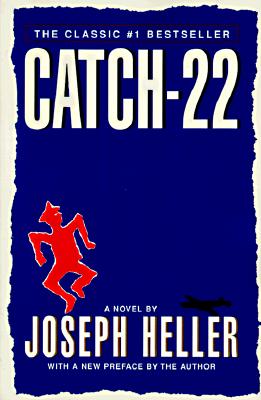
You're Catch-22!

by Joseph Heller

Incredibly witty and funny, you have a taste for irony in all that you
see. It seems that life has put you in perpetually untenable situations, and your sense
of humor is all that gets you through them. These experiences have also made you an
ardent pacifist, though you present your message with tongue sewn into cheek. You
could coin a phrase that replaces the word "paradox" for millions of
people.


Take the Book Quiz
at the Blue Pyramid.


Who'd have thought? I feel like I should go back and do it again, though, because I was divided on one question ...

Aha! If I choose "just the facts" I get this:


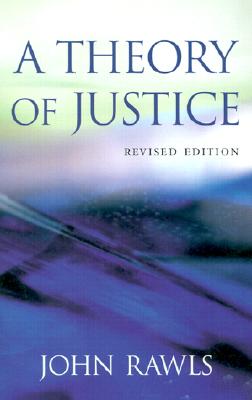
You're A Theory of Justice!

by John Rawls

In the beginning, you lived in a town. The town had many problems!
Rather than moving, you decided to come up with the idea for the best town ever. Going
all the way back to the original position, you created the idea for the best town ever!
Lo and behold, the best town ever looked almost identical to the town you lived in. You
decided to stay in the town. Now you resent people mistaking your refined thought
experiments for "the wall of stupidity" in high school debate
rounds.


Take the Book Quiz
at the Blue Pyramid.


And if I feel old, I'm:


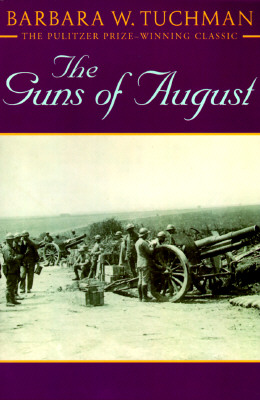
You're The Guns of August!

by Barbara Tuchman

Though you're interested in war, what you really want to know is what
causes war. You're out to expose imperialism, militarism, and nationalism for what they
really are. Nevertheless, you're always living in the past and have a hard time dealing
with what's going on today. You're also far more focused on Europe than anywhere else in
the world. A fitting motto for you might be "Guns do kill, but so can
diplomats."


Take the Book Quiz
at the Blue Pyramid.


and, proof that one gets what one deserves, if one lies:


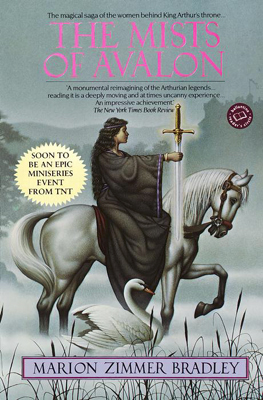
You're The Mists of Avalon!

by Marion Zimmer Bradley

You're obsessed with Camelot in all its forms, from Arthurian legend
to the Kennedy administration. Your favorite movie from childhood was "The Sword in
the Stone". But more than tales of wizardry and Cuban missiles, you've focused on
women. You know that they truly hold all the power. You always wished you could meet
Jackie Kennedy.


Take the Book Quiz
at the Blue Pyramid.


About that last one? No effing way. It is a Bad Book. Gaaaack.

Monday, August 15, 2005

History Carnival 14

History Carnival!!


History Carnival #14 is up at Philobiblion. Read and learn! Read and be amused! Read and Procrastinate!

Thanks to the blogfriends!

Thanks to all my blogfriends!


You guys have been great lately. Thanks to all my friends IRL who don't blog, and to all of my blogfriends (not that the groups are mutually exclusive) for bearing with me.

Now that the immediate crisis has passed (although there may be a different kind looming -- who knows? It's been that kind of year ;-)), I'll try to return to the usual blog topics of things medieval and/or academic. Right now, there are a couple of really interesting (to me, at least) discussions going on at Scribblingwoman's on blogging in the classroom, and at WhatNow on outcomes and assessment. Both of these are near and dear to my heart, so I may weigh in here, too. After I catch up on the grading that the last weekend put off ...

Saturday, August 13, 2005

From Navel-gazing to Stargazing

From Navel-gazing to Stargazing or, the Mother of all Hangovers


Thanks to all my blogfriends for being such awesome blogfriends! Because you are, I thought I owed it to you to tell you how yesterday went. The short version: Survival happened. The long version:


I have a truly vicious hangover. Upset stomach, pounding headache, sensitivity to sounds ... the whole works. A freakishly bad comination of a Corona Light, some alco-pop thing, tequila (the good stuff, straight), tequila (in margarita form), Goldschläger (three or four swallows from a hip flask), a Guinness, and vinho verde. Volumes not as huge as it sounds, though. I was drinking out of one of those tiny 2 oz camping cups ... and over a period of 7 hours. But the last time I drank so stupidly, the Cranky One drove me home from a medievalist party and made me drink a glass of warm saltwater to help me purge my system as much as possible. He also dragged my sorry ass to mass the next day.

But back to how I got that way ...

Yesterday morning, just after I blogged (oh my doG, this young female person just walked by in a tiny bikini top and a jeans skirt resting at least two inches below the top of her pelvic girdle -- she can't be more than 15 -- AND this is a suburban mall, not the beach! WTF???), I left the internet cafe and went out to my car. It was about 11:40, and I had to be about 40 miles away at the county courthouse at 1:15 -- it's normally a 45 minute to an hour drive. Got in, turned the key, the engine turned once ... and stopped. I tried several more times, panicking. Went over the symptoms -- not the starter, because it was clearly turning. Not the battery (I don't think), because the ignition didn't show any sign of weakening -- I haven't checked the electrics, though. Popped open the hood and checked the battery connections and the distributor cap -- everything seemed to be in order.** By now, serious panic is setting in. Called ADH, who said something along the lines of it was my problem, reminding me of why this was all happening*

Called my friend and Americanist colleague, No-longer-intimidating-but-still-frighteningly-purposeful Woman. Said, "I'm Screwed." She said, "What happened?" I told her. 'Where are you??' Told her. "Where is that? How do I get there? I'm coming!" (You need to realize that Purposeful Woman speaks rapid-fire English. With Purpose.) "D'uh ... I'm not sure how to get here from your place ..." "I'll look it up! Don't worry!"

Twenty minutes later, she's telling me about how she had fallen asleep grading essays so it's really not a problem for her to do this. She drives like a slightly illegal speed demon, and gets us there exactly on time. The judge and clerk are late. I sit around with all the other almost ex-wives and we all check each other's paperwork. One husband shows up. One. I was third in line. The judge went over the paperwork, asked me to swear (not, interestingly, before God) to tell the truth, and asked me about 6 questions, after which he said he was convinced the marriage ws irretrievably broken (the only grounds in this state) and that we had made a fair division of property, and gave me back my name (which is still ADM to you guys!). I said, "that's it?" He said, "Yes, that's it." I said, "It's a bit anticlimactic, isn't it?" He said, "Yes, it is, but after everything you've gone through to get to this point, it's probably good to make it easy."

Wow. So I took Purposeful Woman out for a nice lunch, and by the time we got back, I was running late for meeting some other colleagues to go see the Perseids. I threw my stuff into the backpack I've not used since I got married (X-ADH is not a camper), fed the kitties, and was almost ready when they arrived to pick me up. We drove up to the mountains to a place with an odd name, and hiked in to Economist's usual campsite on the River. Hiked in for about half a mile, maybe, and set up camp in the dusk accompanied by mosquitos. Had the first beer on an empty stomach, couldn't find my water bottle in the dark ... So we all sat by the fire and watched the meteor shower (which would have been clearer without the fire, bui it was cold).

The sky was marvelous. The geographer and amateur astronomer and the geologist were there, and so we got some good commentary. Economist played his guitar. There were so many stars that I had a hard time picking out even the familiar constellations. I think it's the first time I ever really could recognize the visible part of the Milky Way -- just so many stars. It was funny, though. So huge, and yet I felt so very secure. I don't know if it was because the sky seemed very finite -- crazy, I know, but it really looked like a sphere, and not something that went on and on and on. But I also had pitched my tent in the most remote of the sites, and really thought I'd be bothered by being *that* alone. When it got down to it, though, there was just so much there -- the stars and the sound of the river rushing by and animals ... but despite the fact that one of my greatest dreads is that this is all there is, I tend to feel very comfortable with the idea that we are very small and transitory in terms of the material universe.

Not nearly enough meteors, though -- but the quality helped to make up for the quantity. So, much drinking, and singing, and up at around 8. Came home, showered, fed the cats, got a cab to a location where the car rental people would pick me up, and rented a car till Tuesday, by when I hope to have my little car towed and fixed. I hope.

Life just freakin' goes on, doesn't it? And that's a good thing ;-)


*in the almost 12 years we were together, X actually picked me up at the airport only once. Never took me. He said it was worth spending the money on cabs or airport parking because his time was worth more than that. Apparently worth more than my feelings, too.

**My guess at this point is the alternator (so I have to check to see if any of the electrics are working today) or the fuel pump. But I could be wrong.

Quick Update: After renting the car, etc., Professor Kinsey called to check in. She offered me the loan of her car till she comes back Tuesday night. YAY! Much money savings. SUCH a great roommate (although I would certainly do the same, but thanks!!!!). Then I went and did some work at the internet place, where I decided to check my poor little car. Which started right up. So my friend the Librarian offered to help me drive it home, where it now is. I will take it to the auto shop tomorrow. I have the best friends ever.

Friday, August 12, 2005

End of an Era

End of an Era or, Maudlin Navel-gazing


After I post this, I'm off to the courthouse where, in about 3 hours (give-or-take) I will stand up in front of a judge and be pronounced legally single and given back my own name. So the last couple of days I've been doing that thing we do sometimes -- imparting far too much meaning to pop music. Yesterday, listening to Mick Jagger singing "Angie" almost brought on a serious blubfest. Yuck.

So today I'm kinda sad. Friends have reminded me that this really is for all the right reasons, but it was also eleven years of two people's lives. So yes, I am better off (although a bit leery of joining the ranks of single female academics of a certain age). My life as I wanted to lead it is back on track, more or less -- more being that I'm once again acting like the person I want to be and becoming productive again, less because I'd hoped to have that and a partner at the same time. And that would never have happened had I remained married.

Still, I thought I'd share one of the good things today, while remembering that I've got all kinds of new baggage to take away from this. Along with the baggage, though, I do have some gifts to thank ADH for. There are some good memories, his wonderful family, a now lifelong love for football and a love-hate relationship with Arsenal. He introduced me to the books of Terry Pratchett and Nick Hornby. And then there is the music. Although ADH never wanted to hear me sing along (for no good reason -- I have a decent singing voice), he did introduce me to a lot of music that I had never really appreciated before: Led Zeppelin, Neal Young, Richard and Linda Thompson, Paul Weller (in various incarnations), less-obvious Van Morrison, Nick Drake before VW used him for a commercial, the Buckleys (Tim and Jeff), and Leonard Cohen. I think we can both take credit for Everything But The Girl, Massive Attack, and Portishead. So for today's poem, I give you a Jeff Buckley version of a Leonard Cohen song, in memory of the good things.

Well I heard there was a secret chord
that David played and it pleased the Lord
But you don't really care for music, do ya?
Well it goes like this:
The fourth, the fifth, the minor fall and the major lift
The baffled king composing Hallelujah

Hallelujah Hallelujah Hallelujah Hallelujah

Well your faith was strong but you needed proof
You saw her bathing on the roof
Her beauty and the moonlight overthrew ya
And She tied you to her kitchen chair
And She broke your throne and she cut your hair
And from your lips she drew the Hallelujah

Hallelujah Hallelujah Hallelujah Hallelujah

Well Baby I've been here before
I´ve seen this room, and I've walked this floor,
You know, I used to live alone before I knew you
And I've seen your flag on the marble arch
And Love is not a victory march
It's a cold and it's a broken Hallelujah

Hallelujah Hallelujah Hallelujah Hallelujah

Well there was a time when you let me know
What's really going on below
But now you never show that to me do ya
But remember when I moved in you
And the holy dove was moving too
And every breath we drew was Hallelujah

Hallelujah Hallelujah Hallelujah Hallelujah

Maybe there is a God above
But all I've ever learned from love
Was how to shoot at somebody who outdrew ya
And it's not a cry that you can hear at night
It's not somebody who's seen the light
It's a cold and it's a broken Hallelujah

Hallelujah Hallelujah Hallelujah Hallelujah
*

Tonight I'll go with friends to the mountains and watch the Perseid showers and gaze at the night skies. A shift in perspective sounds like a good idea.

*This is the version on Jeff Buckley's Grace. I'm not sure if it's the same version that k.d. lang and/or Rufus Wainwright do.